Views: 0 Author: Site Editor Publish Time: 2025-10-31 Origin: Site


Plastic waste is a growing environmental challenge worldwide, with millions of tons of discarded plastics ending up in landfills and oceans each year. Recycling has become a critical strategy for reducing this waste, conserving resources, and promoting sustainability. One of the most important technologies in the recycling process is the Plastic Crusher, which efficiently breaks down waste plastics into smaller, manageable pieces that can be reused in manufacturing or further processing. This article aims to explore how plastic crushers enhance recycling efficiency, improve material recovery, and contribute to environmental protection, highlighting their role in turning plastic waste into valuable resources for a sustainable future.
Plastic crushers operate by shredding or granulating plastic materials into smaller, uniform pieces suitable for recycling or reuse. The machine’s blades or hammers cut through the plastic, while screens or sieves determine the final particle size. This process ensures consistent output that can be directly used in production lines, extrusion, or molding processes. The efficiency of the crushing mechanism depends on blade sharpness, rotor speed, and material characteristics. Regular maintenance, including blade sharpening and inspection of wear parts, is critical to maintain consistent performance and prevent unexpected downtime.
Single-Shaft Crushers: Ideal for processing softer plastics or small-scale operations. They feature one rotating shaft with blades that cut plastic against fixed knives or a screen. They are easy to maintain and suitable for lower-volume recycling.
Double-Shaft Crushers: Designed for tougher or bulkier plastics. Two shafts rotate toward each other, providing higher throughput and better handling of irregularly shaped materials. These are preferred for industrial recycling where higher capacity is required.
High-Speed Granulators: Operate at very high speeds to produce fine granules. Suitable for large-scale recycling operations where uniform particle size is critical, especially for post-consumer plastic waste.
Pre-sorting plastics by type (e.g., PET, PE, PP) and ensuring consistent feed size are essential for crusher efficiency. Overloaded or mixed materials can strain the motor, cause jams, and reduce output quality. Proper material handling improves throughput, reduces wear on blades, and ensures uniform granule size, making the recycling process more efficient and cost-effective. Additionally, careful monitoring of feed rates and avoiding overfeeding extend the life of the crusher and reduce maintenance costs.
This structured approach allows recycling facilities to optimize performance, reduce downtime, and produce high-quality recycled plastic efficiently while minimizing energy consumption and operational issues.
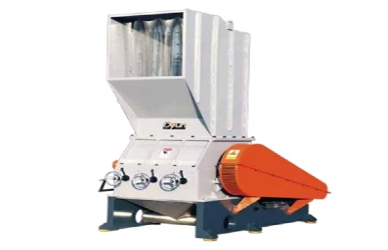
Plastic crushers allow recycling facilities to reclaim valuable plastic materials from waste streams. By breaking down plastics into uniform granules or flakes, these crushers enable materials to be reused in manufacturing processes such as extrusion, molding, or packaging production. This helps conserve raw resources, reduce dependency on virgin materials, and supports sustainable production practices. Additionally, high-quality output from crushers ensures that recycled plastics can meet industry standards, making them suitable for a wide range of applications.
Recycling plastics with crushers reduces dependency on virgin raw materials, lowering procurement costs. Producing consistent granules or shredded plastics also minimizes the need for additional processing, reducing operational expenses while maintaining high-quality output for reuse. Efficient crushers also reduce energy consumption compared to manual or less optimized processes, contributing to long-term cost savings.
Plastic crushers help divert waste plastics from landfills, contributing to lower environmental pollution. By enabling efficient recycling, they support circular economy initiatives, reduce carbon footprint, and promote responsible waste management practices in both industrial and municipal settings. Using crushers also mitigates the environmental risks associated with plastic incineration or improper disposal, further enhancing sustainability efforts.
These machines streamline recycling workflows by processing large volumes of plastic quickly and consistently. They reduce manual labor, minimize material handling, and improve throughput, allowing facilities to operate more efficiently while maintaining consistent quality of recycled materials. Advanced crusher designs with automation and monitoring features further enhance workflow efficiency, reduce downtime, and ensure continuous operation.
Using plastic crushers, recycling facilities can achieve a balance of economic, environmental, and operational benefits, making them essential for sustainable plastic management and long-term industrial productivity.
Understanding the type, size, and shape of plastics being processed is critical. Hard, brittle plastics may require different crusher settings compared to flexible or mixed plastics. Consistent feed material ensures uniform granule size, reduces jams, and improves overall crusher efficiency. Pre-sorting plastics by type, color, or thickness can further optimize crusher performance and prevent contamination in recycled output, ensuring high-quality end products suitable for reuse in manufacturing processes.
Selecting a crusher with appropriate size, power, and throughput capacity is essential for meeting recycling demands. Overloading a smaller crusher can lead to frequent breakdowns, increased energy consumption, and reduced efficiency, while undersized machines may slow production and create bottlenecks. Matching crusher capacity to your facility’s volume ensures optimal performance, minimizes maintenance costs, and allows for scalable operations as recycling demands grow.
Plastic crushers should include essential safety mechanisms such as emergency stop buttons, overload protection, and protective guarding around moving parts. These features protect operators from accidents and minimize downtime caused by safety incidents. Proper training in safe operation, along with routine safety audits, ensures compliance with workplace regulations and promotes a culture of safety within the facility.
Regular maintenance is key to long-term efficiency and reliability. Blade inspection and sharpening, lubrication of moving components, and removal of debris or material build-up prevent premature wear, reduce energy consumption, and ensure consistent crushing performance. Implementing a structured maintenance schedule and keeping detailed service records also helps predict component lifespan and reduces unexpected downtime, ultimately improving operational productivity.
Considering these factors allows recycling operations to maximize output, maintain safety, and extend the lifespan of their plastic crusher equipment, ensuring consistent, high-quality production while lowering operational costs.
Plastic crushers are widely used to process everyday household plastics, including bottles, containers, and packaging materials. By reducing these items into uniform granules, crushers enable easier handling, storage, and reprocessing into new products, supporting residential recycling programs.
In manufacturing and production settings, crushers handle plastic scraps, defective parts, and offcuts. Recycling these materials reduces waste disposal costs, recovers valuable raw materials, and allows manufacturers to reintroduce recycled plastic into the production cycle efficiently.
Plastic crushers are essential for processing large volumes of post-consumer waste collected from municipal recycling programs. Bottles, packaging, and other plastics are shredded into granules suitable for reuse in new products, helping reduce landfill burden and promote a circular economy.
By applying plastic crushers across these different scenarios, recycling facilities can optimize material recovery, improve processing efficiency, and contribute to sustainable waste management practices.
A1: Plastic crushers are versatile and can process a wide range of plastics, including PET (polyethylene terephthalate), PE (polyethylene), PP (polypropylene), PVC (polyvinyl chloride), and PS (polystyrene). Some crushers are specifically designed for rigid plastics, while others handle flexible materials more efficiently. Proper selection of the crusher type ensures optimal performance and minimal wear.
A2: The size and capacity of a plastic crusher directly influence processing efficiency. Larger crushers can handle higher volumes of material, increasing throughput and reducing processing time. However, choosing a crusher that matches the plant’s typical material volume and production rate ensures energy efficiency, prevents overloading, and reduces unnecessary wear on components.
A3: Yes, plastic crushers can be fully integrated into automated recycling systems. They work in combination with conveyors, sorters, and granulators to create a continuous recycling workflow. Integration helps improve material handling efficiency, reduces labor requirements, and ensures uniform granule size for further processing or manufacturing.
A4: Safety is critical when operating a plastic crusher. Key measures include installing emergency stop buttons, overload protection systems, and proper guarding around moving parts. Operators should receive adequate training, and routine safety inspections should be performed to prevent accidents. Maintaining these precautions ensures a safe work environment while minimizing equipment downtime and damage.
Plastic crushers play a vital role in modern recycling operations by efficiently breaking down plastic waste into reusable and manageable materials. These machines not only enhance material recovery but also improve overall processing efficiency, enabling facilities to handle larger volumes of plastic consistently. Additionally, plastic crushers contribute significantly to environmental sustainability by reducing the amount of plastic sent to landfills and supporting circular economy initiatives. Choosing the right crusher—taking into account factors such as plastic type, processing volume, desired output size, and specific operational requirements—is essential for maximizing performance, minimizing energy consumption, and ensuring long-term reliability.
By following best practices, including regular maintenance, proper feed control, blade inspection, and adherence to safety protocols, recycling facilities can extend the lifespan of their crushers, reduce unexpected downtime, and maintain consistent output quality. Integrating smart features or automated controls can further enhance operational efficiency and reduce labor costs. Ultimately, implementing plastic crushers enables recycling operations to transform plastic waste into valuable resources, generating both economic and environmental benefits, while supporting sustainable and responsible waste management practices.

